
Correct Squat Form: A Quick Answer Our Physical Therapists Use
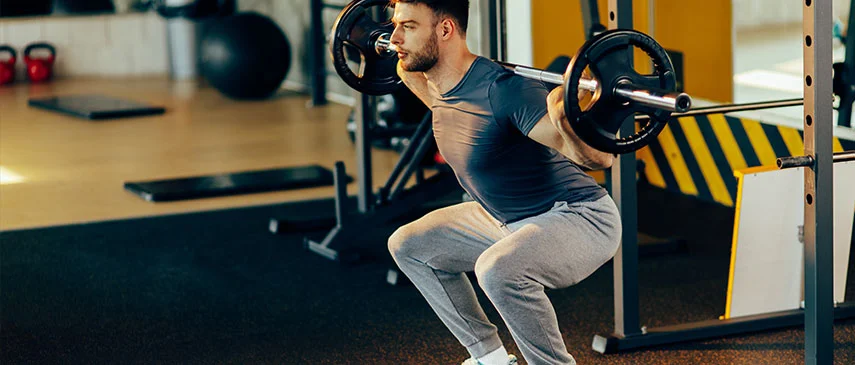
To squat with correct squat form, stand with feet about shoulder-width apart and toes slightly turned out, then brace your core and keep your chest up with a neutral spine. Start the movement by pushing your hips back and down like you are sitting into a chair, while letting your knees track in line with your toes. Lower until your thighs are parallel to the floor, or slightly below if your mobility allows, and keep your heels down and your weight through your mid-foot. Stand back up by pressing through your heels, squeezing your glutes, and straightening your hips and knees together.
Correct squat form checklist:
Feet grounded, weight centered on heel and mid-foot
Knees track over toes, not caving inward
Chest stays lifted, and back stays neutral
Core stays braced from start to finish
Depth stays pain-free, controlled, and repeatable
Squats are seen as an essential exercise move by personal trainers, our psychical therapist and gym fanatics all over the U.S. Regardless of your age, gender or fitness level, squats should definitely be part of your regular workout and physical therapy routine. While many people think that squats are all about working the leg muscles, they actually benefit the entire body in a number of different ways. Squats are a great exercise for running faster, shedding a few extra pounds and maintaining a higher level of overall mobility. Strong legs are important for supporting the entire body, and when completed correctly, squats can help to build muscle and prevent injuries.
Physical Therapy and Exercise: Learning How to Complete a Proper Squat Has Many Health Benefits
If you’re looking for a great way to burn calories and increase your metabolism while building muscle, then our physical therapists agree that the humble squat is the ideal workout move for you. The legs contain some of the biggest muscles in the body, and in addition to walking or jogging, squats are the easiest way to get in a great leg workout. In fact, any physical therapist will tell you that a proper squat doesn’t even require the use of added heavyweights to be effective. Some of the additional health benefits of learning how to perfect your proper squat form include:
Burns fat
Improves circulation
Reduces cellulite
Increases flexibility
Helps to prevent sports or workplace injuries
Improves posture
Builds up core strength
Tones legs, abs and butt
Low impact exercise
Ask a Physical Therapist: Why Should I Add Squats to My Squats Exercise Routine?
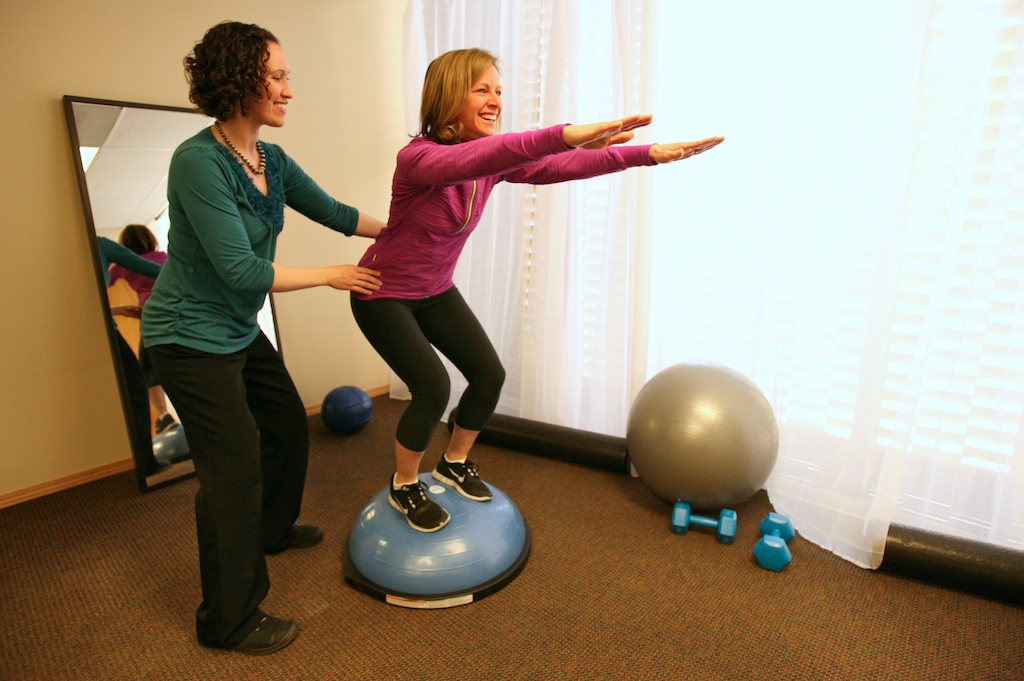
Once you’ve got the right squat form down, you’ll see that this simple yet effective exercise works to increase your mobility and burn more calories. While many physical therapy patients may believe that squats are hard on the knees when completed properly, they can actually help to improve knee stability and strengthen the surrounding connective tissues. Our physical therapists recommend proper squat exercises for patients of all ages as a safe exercise designed to burn fat and increase overall strength.
Perfecting the proper squat form is especially effective for athletes in physical therapy who may otherwise be prone to leg and knee injuries. Squats can help to boost your sports performance by strengthening the leg muscles and increasing your ability to run faster.
How to Do a Squat Correctly: Tips for Doing Squats from Our Physical Therapist
When completed correctly, squats don’t have to put unnecessary strain on your knees and send you into our offices for an emergency physical therapy appointment. Follow these simple steps to perfect your squat form:
Begin by warming up with a few simple stretches to prevent excess strain on the leg muscles and joints.
Stand with your feet slightly wider than shoulder-width apart.
Stand with your back in a neutral position and your knees centered over your feet.
Remember to breathe in as you lower your body and breathe out as you return to the start position.
Slowly bend the knees, hips and ankles as you lower your body to reach a comfortable 90-degree angle.
Keep the core engaged as you return to the start position.
Repeat the squat 15 to 20 times (two to three total sets for beginners), and integrate squats into your workout two to three times per week.
Understanding Proper Squat Depth: How Deep Should You Go?
Many people ask our physical therapists, “What is proper squat depth, and how deep to squat?” A common starting point is parallel depth, where your hips reach about the same height as your knees, or roughly a 90-degree bend. Some athletes train below parallel depth, where the hips drop slightly below the knees, because it can build strength through a longer range of motion.
That said, correct squat form is not a one-size-fits-all depth. Your hip and ankle mobility, knee comfort, past injuries, and goals all matter. Physical therapy patients rebuilding strength may do best with a controlled, pain-free parallel squat at first, then gradually work deeper as mobility improves.
You have gone too deep if your lower back rounds (often called a “butt wink”), your heels lift, your knees shift wildly, or you lose core tension. To find your personal optimal depth, squat slowly to the lowest point where you can keep a neutral spine, heels down, and steady balance. Pause there, breathe, and use that depth consistently while you build strength and control.
Common Squat Form Mistakes (And How Our Physical Therapists Fix Them)
Even with the best intentions, common mistakes can sneak into your squat and increase stress on the knees, hips, or back. Our physical therapists recommend checking your form in a mirror or filming a few reps, then making one small correction at a time. If something hurts, stop and reset, because proper squat technique should feel challenging, not sharp or pinchy.
Knees caving inward: often due to weak hip muscles or loss of foot pressure. Think “knees track over the middle toes,” and press the floor apart.
Back rounding: usually a depth or mobility issue. Reduce your range, brace your core, and practice slow reps.
Heels lifting: commonly tight ankles or shifting to the toes. Widen your stance slightly, keep weight through the mid-foot and heel, and work ankle mobility.
Chest collapsing forward: often weak upper back or poor bracing. Lift the chest, keep ribs stacked over hips, and hold a light counterweight if needed.
Weight drifting to toes: frequently from rushing the descent. Sit back and down, keep your whole foot grounded, and move with control for correct squat form.
Squat Variations to Match Your Fitness Level
One of the easiest ways to keep squats in your squats exercise routine is to choose squat variations that match your current strength, balance, and comfort. Our physical therapists recommend starting with the version that lets you maintain proper form, then progressing as your control improves. Small changes can make squats feel safer and more effective for the whole body.
Wall squats: Stand with your back against a wall and slide down slowly. This is great for beginners, seniors, or anyone with balance concerns, because the wall helps you stay upright and controlled.
Chair squats: Sit back to a chair, lightly touch down, and stand back up. This option works well for physical therapy patients with mobility limitations, and it gives you a consistent depth target.
Goblet squats: Hold a light dumbbell or kettlebell at your chest. The front load encourages an upright torso and can help you “feel” correct squat form.
To progress, add reps, add a brief pause at the bottom, lower the chair height, or gradually increase weight, while keeping pain-free movement and steady technique.
Whole Body Health Recommends: Add Squats to Your Comprehensive Fitness Routine
Whether you’re working through a mobility injury in physical therapy or you’re simply looking to increase strength in your legs, squats are an easy and low-impact exercise.
Call Whole Body Health today to see how our physical therapy can help you live a pain-free life and achieve your personal fitness goals.