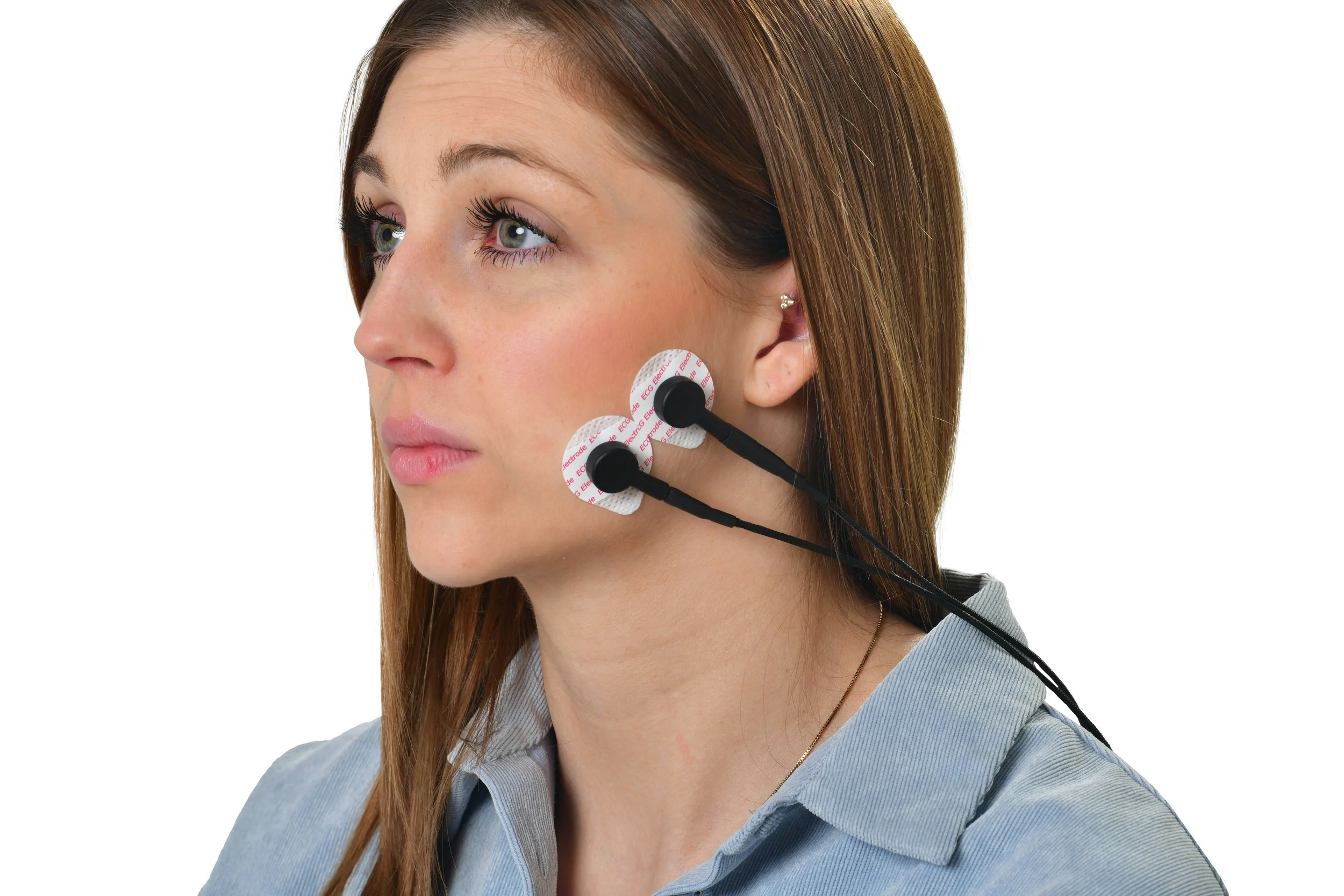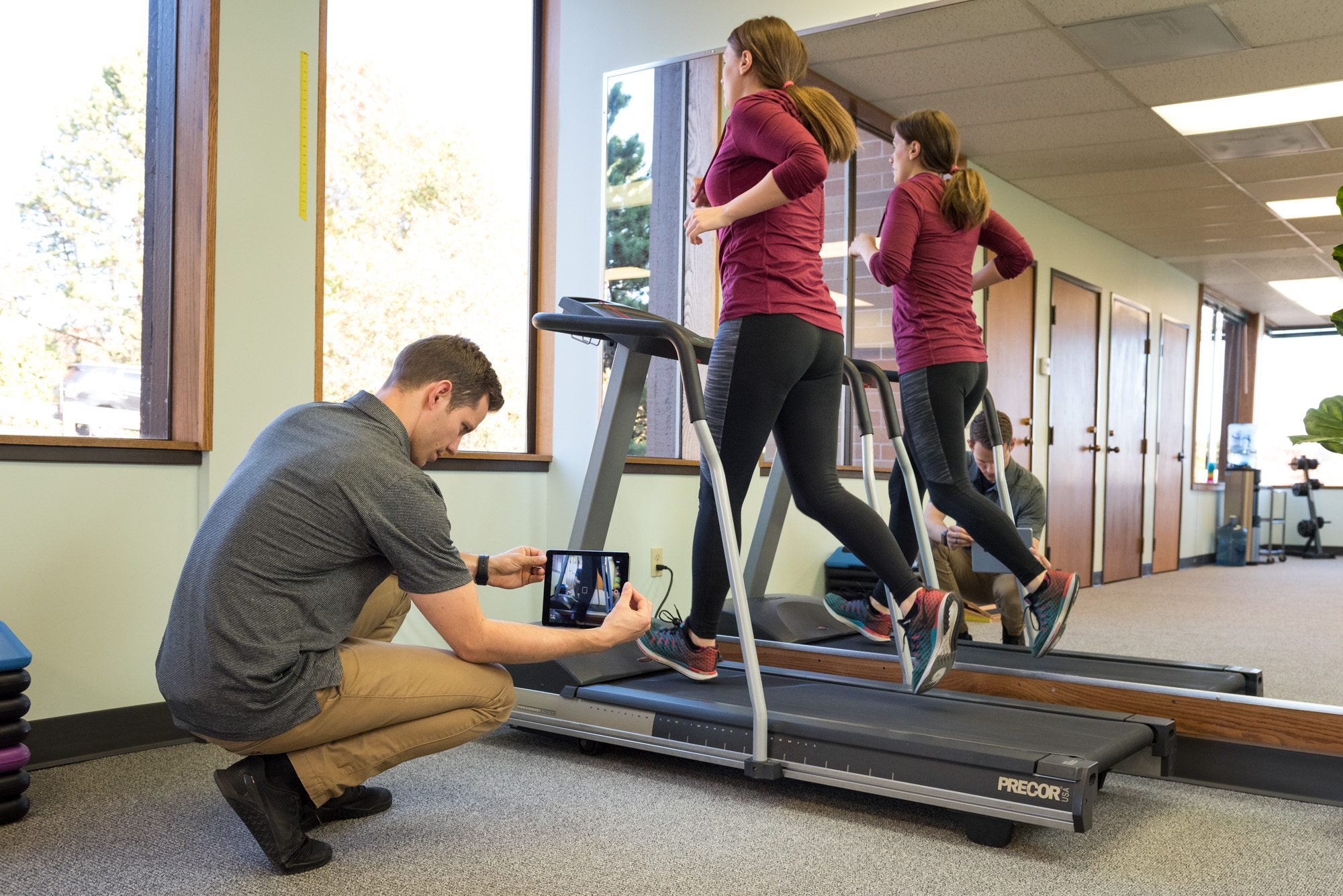

TMJ disorder can be treated without surgery or medication. A physical therapist explains why non-surgical TMJ treatment resolves 90% or more of cases, when surgery is truly needed, and what passive treatments often miss.

Make Movement Matter
Yes, posture is directly related to TMJ pain and jaw dysfunction. Forward head posture, the most common postural driver of TMD, increases mechanical demand on the muscles that stabilize the jaw, creating sustained tension that contributes to muscle imbalances, uneven disc loading, and chronic jaw pain. The jaw, neck, and upper back operate as an interconnected biomechanical system. What happens in one area directly affects the others.
Here is the more honest version, based on what I actually see clinically.
Forward head posture (FHP) alters the resting position of the lower jaw, overloading the temporomandibular joint and triggering temporomandibular dysfunction. Most people assume posture and jaw pain are either completely unrelated or that bad posture always causes jaw pain. The honest truth lies somewhere between those two extremes and depends heavily on the individual.
Forward head posture, where the head sits in front of the shoulders rather than balanced directly over them, increases mechanical demand on the suboccipital muscles at the base of the skull, the upper trapezius, and the levator scapulae. When those muscles are working overtime to hold the head in a forward position, they create a sustained tension that pulls on everything connected to them, including the muscles and ligaments that stabilize the jaw.
The practical result is mandibular retraction, where the lower jaw is pulled backward and downward, forcing the joint to work against resistance on every opening movement. Over time, that backward pressure can displace the articular disc, contributing to the clicking, uneven loading, and muscle imbalances that drive most TMD cases.
Screen use is the most common driver of this pattern, but the problem existed long before screens were part of daily life. Hours of looking at a monitor positioned too low, or at a phone held below eye level, gradually trains the head into a forward position that becomes the default resting posture. The jaw often pays the price for it.
Posture does not directly determine pain outcomes. The relationship between alignment and symptoms must be assessed individually, not assumed. I see patients all the time with significant forward head posture and rounded upper backs and shoulders who have no jaw pain, no neck pain, and no functional limitations whatsoever. Their body has adapted to that posture over years or decades, and it functions perfectly well within it. If I tried to intervene and "fix" their posture, I would almost certainly create new movement problems rather than prevent ones that do not currently exist.
I also see patients with near-perfect postural alignment who are in significant, chronic jaw pain. Posture alone does not determine outcome. The correlation that most people assume (bad posture equals pain, good posture equals no pain) simply does not hold up clinically.
My approach is this: if a patient comes to me with TMD symptoms and I notice their posture is contributing to how the jaw is loading, then posture becomes part of the treatment plan. If someone comes in for something else entirely, their posture is poor, but they have zero jaw or neck symptoms, I am not going to touch it. I am not going to fix what is not broken. Trying to intervene where there is no problem often creates one.
The takeaway is not that posture does not matter. It is that posture matters when it is connected to your specific symptoms and movement, and that connection needs to be assessed individually, not assumed.
For patients who do have a posture-TMD connection, sustained or asymmetrical positions are the primary mechanical drivers of jaw loading. These are the habits I look at first:
Forward head at the workstation: Monitor height, screen distance, and chair support all influence how far forward the head sits during hours of work. A screen positioned too low is one of the most common drivers of forward head posture I see.
Looking down at a phone: The neck loading from sustained downward phone use is equivalent to a forward head position repeated in short, frequent doses throughout the day. The cumulative effect adds up.
Stomach sleeping: Forces the head into a rotated position for hours at a time, creating sustained asymmetrical tension through the cervical spine and jaw stabilizers on one side.
Side sleeping when the jaw shifts: For patients whose jaw deviates to one side during opening, side sleeping repeatedly loads that same side through the night. Switching to back sleeping removes that repetitive asymmetrical pressure.
Bending toward food while eating: The jaw and neck work closely together. Hunching or bending down toward the plate puts the neck in a compromised position during one of the most mechanically demanding activities the jaw performs. Sitting upright and bringing food to the mouth rather than the reverse keeps the jaw in a better position during chewing.
Sustained static postures: Holding any position without moving for long periods — even a technically good posture — creates load accumulation. Variety matters more than perfection.
When posture is genuinely contributing to TMD, correcting forward head carriage is a direct and measurable intervention, and the improvement can be significant. Patients who reduce the tension load through the cervical chain often notice their jaw feels less effortful to open, less prone to clenching, and less reactive to the things that used to trigger flares. But the approach matters.
Trying to hold perfect posture all the time can backfire for TMJ. Rigid alignment is exhausting to maintain and tends to create new tension and stiffness patterns. The goal is comfortable, sustainable posture rather than one “perfect” position. I would even go as far as to say perfect posture does not really exist.
What actually works in my clinical experience is intermittent correction. When you notice you have collapsed into a significant forward head position, especially if that position is associated with jaw symptoms, that is the moment to adjust.
Fix your posture the moment you notice a “less than ideal” position, and keep trying to do that throughout the day. You will fall back into those old patterns often, but fixing them every time you notice is the best way to eventually realize better posture day to day. Over time, those intermittent corrections gradually shift the resting default without requiring conscious effort all day.
The other piece is variety. Any position held without movement for extended periods becomes problematic, even if it looks like “perfect posture”. Getting up regularly, changing positions, and keeping the cervical spine moving through its range are as important as any specific corrective posture.
Posture during eating is an area that gets almost no attention but makes a meaningful difference for TMD patients. The jaw and neck function as a unit during chewing. The position of one directly affects the load on the other. A few specific habits worth building:
Sit upright when eating: Do not bend down toward your food. The jaw and neck work as a unit, and if the neck is in a compromised position during chewing, the jaw is too. Bring food to your mouth rather than your mouth to your food.
Chew evenly on both sides: Consistently favouring one side during chewing loads one TMJ more than the other and contributes to the muscle imbalances that drive most TMD symptoms. Using the back molars rather than the front teeth distributes load more evenly across the joint.
Avoid hard and chewy foods during flares: Nuts, raw carrots, bagels, steak, and anything similarly demanding on the jaw should be minimized when symptoms are elevated. Cut tough foods into smaller pieces and chew slowly.
Physical therapy for posture-related TMD targets the full muscle chain, not just the jaw, combining manual release with movement retraining to address the source of the problem rather than the symptoms alone.
In the clinic, postural work for TMD patients is not about telling someone to sit up straight and sending them home with a handout. It involves manual release of the muscles that have become shortened and overloaded from sustained postures (the suboccipitals, upper traps, levator scapulae, and paraspinals) combined with retraining the movement patterns that created the problem.
The manual release piece matters because tight, restricted tissue cannot be retrained through exercise alone. You have to release the restriction before the retraining has something to work with. That is why we cover the myofascial release of the cervical chain in detail in our article on massage and myofascial release for TMJ. It is the foundation that postural retraining builds on.
The retraining piece involves building awareness of the patterns that load the jaw, making targeted adjustments to workstation setup and daily habits, and gradually shifting the resting default of the head and neck through consistent intermittent correction rather than forced sustained positioning.
For most TMD patients, posture is one contributing factor among several, not the whole story, but not negligible either. Getting an accurate read on whether and how it is contributing to your specific case is part of what a thorough assessment provides.
If you are ready to find out what is actually driving your jaw pain, our TMJ physical therapy management-program team at Whole Body Health can give you that answer.
One of the most common things I hear from new patients is that they have already tried jaw exercises they found online on how to relax TMJ muscles and they did not help. Sometimes they made things worse. When I ask what they were doing, it is usually a list of generic stretches or movements that look reasonable on paper but miss the actual problem entirely. In some cases they actually make the problem worse by overworking already overtaxed muscles or stretching areas that are already overlengthened.
The exercises that work for TMJ are not complicated, but they need to target the right thing for your specific problem. And the right thing is often a bit illusive and not what people assume without the help of a specialized healthcare provider.
Most people assume jaw pain means weak jaw muscles, so they try to strengthen them. That is rarely the issue. In the vast majority of TMJ cases, the muscles are plenty strong. The problem is neuromuscular coordination, and how quickly the muscles on each side fire in tandem with each other, and whether they are “speaking the same language”.
If the muscle on one side is chronically overloaded and tight, it often starts activating faster than the other side. That creates a hitch, a deflection, an uneven pull on the joint every time you open your mouth. Multiply that by the thousands of jaw movements you make every day and you have a recipe for sustained irritation.
So the goal of most TMJ exercises is not to build strength. It is to calm down the overactive side, wake up the underactive side, and get both of them working together again. Once you understand that, the exercises make a lot more sense.
These are the exercises I use most consistently with my patients and teach as part of their home program. Some of them look simple from the outside. Do not let that fool you! The specifics matter a lot. Please also keep in mind that these are general recommendations, and more specific recommendations would require an individualized examination and assessment.
The masseter is the big clenching muscle on each side of your jaw - the one that bulges when you bite down hard. For most TMJ pain patients, this muscle is chronically overloaded and needs to be released for pain relief and before anything else will work well.
The most effective way to do this at home is from inside the mouth. I know that sounds odd, but it is the only way to actually get under the muscle and stretch it outward rather than just pressing on the surface into your teeth and gums. Here is how I teach it:
Use your shower as the “trigger”. Warm water helps relax the tissue, and building it into your routine so you do it every time you are in the shower means it actually happens. With a clean thumb, reach across your body to the inside of your opposite cheek and work your way up toward the TMJ joint.
Once you find the muscle belly, use the pad of your thumb to apply gentle outward pressure (a tug from inside to out) and hold a moment, working up and down the vertical length of the muscle. You can also do slow concentric circles to work through any knots you find.
You should feel significant pressure and possibly some aching, but not sharp pain. If you find a spot that is particularly reactive, that is usually where you need to spend the most time. Start fairly gentle and build up your intensity over days.
If your jaw feels tight and compressed, or if you have been having trouble opening to a comfortable distance, joint gapping can create some immediate relief. The idea is simple: gently grasp your lower jaw from the back where it transitions from vertical and horizontal, and apply a small amount of downward and forward traction to open up space in the TMJ near your ear.
This is especially useful when the disc has been getting caught during opening, usually indicated by clicking with opening and closing. Sometimes giving the joint just a little extra space allows the disc to track back into a better position, and you will notice the movement feeling smoother immediately after.
The key word is gently. This is not a forceful stretch. The amount of pressure involved is much less than most people expect . You’re creating space, not unhinging the jaw.
This is the exercise category that most generic TMJ content misses entirely, and it is often the most important one.
Start by placing your tongue on the roof of your mouth. This position inhibits some of the jaw clenching muscles and gives the joint a more neutral starting point. From there, open your mouth as slowly and as controlled as you possibly can, then close again.
Using a mirror ass you do this, pay attention to whether your jaw is tracking straight down the midline or veering to one side. Most people with TMJ dysfunction will notice a pull or a hitch somewhere in the range of motion. That is the asymmetry we are trying to correct.
The goal is not to force the jaw to move straight. It is to develop enough body awareness that you can sense which side is trying to dominate and gradually teach both sides to engage more evenly. Start with slow, small movements and build from there.
The pterygoid muscles sit higher up inside the mouth, closer to the joint itself. Releasing them can make a significant difference for patients with deep joint pain,restricted opening, or restricted side to side motion of the jaw — but I want to be honest about this one: it is not comfortable, and it is easy to do incorrectly on your own.
When I work on this area in the clinic, patients almost always get tears in their eyes immediately from the sharpness of the discomfort. Not from distress, but from the intensity of the sensation, which is that particular headachy, pressure-filled discomfort that tells you something real is happening.
They are almost universally glad we did it afterward, but it is not something I typically assign as independent homework without walking someone through it carefully first.
If I could give every TMJ pain patient one piece of exercise advice that has nothing to do with their jaw, it would be this: start lifting weights.
I do not mean anything extreme or high level. But any kind of full-body strengthening — squats, deadlifts, general resistance training — has a notably positive effect on TMJ pain, and the mechanism is not just circulation or endorphins, though those matter too.
When you load your body through resistance training, you are essentially teaching your tissue and your nervous system that physical stress is normal and manageable. The body becomes less reactive overall. The same jaw that used to flare up from biting into something slightly firm starts responding with less alarm because the whole system has recalibrated its baseline.
There is almost an exposure therapy quality to it. The more you ask your body to handle load in a controlled way, the less it treats every minor mechanical event as a threat. I have seen this make a meaningful difference for patients who had plateaued with every other intervention. If you want to understand more about why the nervous system piece matters so much for TMJ pain, we go into that in more depth in our article on how stress and anxiety affect jaw pain.
Getting the right exercises is only half of it. These are the things I ask patients to audit and reduce alongside their exercise program:
Chewing gum: Sustained repetitive jaw loading with no real benefit. One of the first habits to eliminate.
Eating hard or sticky foods during a flare: Nuts, raw carrots, bagels, anything that requires wide opening or prolonged force. Give the joint a break while you are doing the work.
Unsupported wide yawning: Placing your fist under your chin during a big yawn limits the range and protects the joint from overextension.
Clenching during exercise: A lot of people brace through their jaw during effort without realizing it. Tongue on the roof of the mouth is the cue I use to break this habit.
Doing exercises through sharp pain: Intensity and pressure are expected. Sharp, shooting, or worsening pain is a signal to stop and reassess, and if it persists, it’s time to get an evaluation.
Home exercises are genuinely effective for a lot of people, and starting them costs nothing. But there are situations where going it alone may not be the right call:
Your jaw is locking — getting stuck open or closed
Clicking is accompanied by pain or a visible deviation in how the jaw tracks
You have been consistent with exercises for several weeks and symptoms are not changing
Pain is worsening rather than gradually improving
You are not sure whether what you are feeling during an exercise is normal intensity or something wrong
That last point matters more than people realize. A lot of the most effective TMJ exercises involve working with some discomfort, and without guidance it is genuinely hard to know whether what you are feeling is productive or harmful. Part of what a good TMJ physical therapist does is calibrate that for you — show you what it should feel like, how intense it should be, and what to do when you hit a wall.
If you are ready to move beyond home exercises and work with someone who can build a program specific to what your jaw actually needs, our TMJ physical therapy team is a good place to start.
Yes, physical therapy can help reduce or resolve jaw popping and clicking, and in most cases, it is the most effective non-surgical approach available. But before we get into treatment, it’s worth understanding what jaw clicking actually means, because not every click signals the same problem. The right treatment depends on what is driving the noise in the first place.
Chronic stress and anxiety are well-documented contributors to making TMJ (TMD) worse. Stress triggers unconscious habits like teeth grinding (bruxism) and jaw clenching that place sustained strain on the temporomandibular joint and surrounding muscles
Over time, that tension drives inflammation, limits movement, and lowers the body's pain threshold, making symptoms feel more severe. What makes this particularly difficult to treat is that stress and pain feed each other: TMD causes stress, and stress worsens TMD.
The TMJ (the temporomandibular joint) is the anatomical structure where your jaw meets your skull. TMD, or temporomandibular dysfunction, is the clinical condition that occurs when that joint and its surrounding muscles are not functioning properly. Most people search for "TMJ" when they are referring to the clinical term "TMD." I'll use both interchangeably, but they're not quite the same thing.
Most people who come to me with jaw pain are expecting me to look at their jaw. And I do, eventually. But within the first ten minutes of almost every TMJ appointment, I am asking about sleep, work, relationships, and stress levels. That is not small talk. That is the evaluation.
Chronic TMD is a multifactorial pain experience. It involves not just biomechanics but stress, anxiety, work satisfaction, genetic factors, and the accumulated load of daily life.
You can't resolve TMD without looking at all of those things. Physical therapists who focus only on muscle and joint mechanics (what I call the "horse blinders" approach) put a ceiling on how much progress their patients can make.
Here is the part that tends to surprise people: the relationship between stress and jaw pain is not just psychological. It is also neurological.
Modern pain science has moved well past the idea that “tissue damage causes pain” and that is the end of the story. What we now understand is that pain is much more a function of your subconscious nervous system registering threat.
When there is more threat than safety in your environment at any given moment, your body is more likely to generate pain signals, even in areas that have nothing mechanically wrong with them.
I use this example with my patients: imagine you just had an uncomfortable phone call with a family member, and an hour later your jaw is aching. Nothing changed in the joint. No new injury occurred. But the overall threat level in your nervous system went up, and the areas already sensitized from your TMJ history flared in response.
This is not in “just in your head”. It is an accurate description of how your nervous system actually works.
For people dealing with chronic TMJ, this threat-and-safety model explains a lot. The jaw is the most active joint in the human body, moving thousands of times per day. When your nervous system is already running hot from stress, that constant movement becomes a constant source of irritation in a way it simply would not be on a calm day.
Pain is not solely caused by tissue damage. If it were, phantom limb pain (the phenomenon where a person perceives pain in a limb that no longer exists) would be impossible. And yet it is a well-documented phenomenon in medicine that many of us have heard of before.
I am currently working with a patient who experiences significant big toe pain most days. He does not have that big toe. He does not have a foot, an ankle, or a knee on that side. But he can point to exactly where the pain is in his "toe" in the air in front of him.
That is your nervous system generating a pain experience in the absence of tissue damage, or in the absence of the tissue at all. Once you understand that, the idea that a stressful week can spike your jaw pain without any physical trigger becomes a lot less mysterious.
Another example I use: imagine stepping on a nail while crossing a busy road. If no traffic is coming, you are going to collapse to the ground and make a scene. But if a truck is heading straight for you at that exact moment, you will sprint to the other side and not even register the nail until you are out of the truck’s path.
Same injury. Completely different pain experience.
Your brain decided which threat was more urgent and filtered the other one out accordingly.
Chronic TMD is a miscalibrated pain protection system. It’s still trying to protect you. It’s just doing so inconsistently, amplifying signals that do not always reflect actual tissue damage or actual threat. This is one of the most important things I want my TMJ patients to understand.
Yes, chronic stress is a primary contributor to TMJ disorder. The most direct pathway is through bruxism, the unconscious grinding and clenching of teeth, which creates sustained mechanical load on the joint and surrounding muscles. If you are waking up with jaw soreness or tension headaches, nighttime clenching is often a significant contributor.
But stress does not have to express itself through clenching to make TMJ worse. Elevated stress hormones and nervous system escalation increase overall muscle tension throughout the body.
Chronic anxiety keeps the nervous system in a heightened threat-response state, causing lower-level signals to be perceived as more serious than they are. Poor sleep from stress reduces your body's ability to recover from normal daily wear on the joint. All of these things compound.
When a patient tells me their TMJ pain is worse when they are stressed, I believe them immediately. In my experience, that statement is true of about 99% of the people I see.
This is an important distinction that does not get discussed enough. Acute TMJ (TMD), short-term jaw problems that have been building for only a few days or weeks, often responds well to mechanical treatment alone. The stress factors are still present but have not had time to become deeply embedded in the pain pattern yet.
Chronic TMJ is a different situation entirely. When someone has been dealing with jaw pain for six months or more, and especially beyond five years, the stress and nervous system component has become the dominant driver. In those cases, lifestyle and stress management are not supplementary to the treatment. They are the treatment. The biomechanics matter too, but they are significantly less of the overall picture at that point.
This is why TMJ disorders that have been present for a long time tends to be episodic rather than linear. It will improve significantly, sometimes almost completely, and then flare again when something stressful happens, such as a change in job, a relationship shift, a difficult season.
That is not a failure of treatment.
That is the nature of a pain condition that lives partly in the nervous system.
Before I touch anyone's jaw, I spend time on the modifiable stress factors in their life. Some stressors are outside our control, and I am not going to pretend otherwise. But the ones within reach are often more impactful than any specific exercise I could prescribe.
The practical interventions I discuss most often include getting off screens earlier before bed, adding a daily walk even if it is just around the block, and finding small rituals that signal to the nervous system that the day is winding down. These are not soft suggestions. Consistent low-level movement and stress reduction create measurable changes in chronic pain outcomes. There is real evidence behind that.
For patients who are resistant to the stress conversation (and some are), I take a different approach. I focus on building an exercise habit, knowing that regular movement regulates the nervous system whether someone is thinking about that or not. Getting someone to do upper body lifting two or three times a week achieves stress reduction as a side effect, without requiring a conversation about it directly.
The goal is always to reduce the total load the nervous system is carrying. When that load comes down, the jaw usually follows.
Based on what I see in practice, these are the non-mechanical factors that move the needle most for TMJ patients dealing with stress-related flares:
Consistent sleep: Not just duration but regularity. Your nervous system responds well to predictable rhythms.
Daily movement: Walking counts. Bowling counts. The specific activity matters less than the consistency.
Screen reduction before bed: This one has an outsized effect on sleep quality, which affects everything downstream.
Nightguard use: If you are clenching at night, this is a direct mechanical intervention worth coordinating with your dentist.
Awareness of jaw resting position: The correct jaw resting position is teeth apart and jaw muscles relaxed when the mouth is closed. Many chronic clenchers do not realize their teeth are in contact for hours every day.
None of these are dramatic. That’s the point.
The cumulative effect of consistently lowering the background noise in your nervous system is often more powerful than any specific clinical technique.
If you are dealing with chronic TMJ pain and stress is clearly part of the picture, TMJ-specialized physical therapy addresses both the mechanical and nervous system components of TMD, rather than treating the jaw in isolation and wondering why the results do not hold..
TMJ pain that keeps coming back despite treatment is often a nervous system problem, not just a jaw problem. That is what I treat.
Ready to treat the whole picture? Book a TMJ assessment with a TMJ physical therapist in Portland