
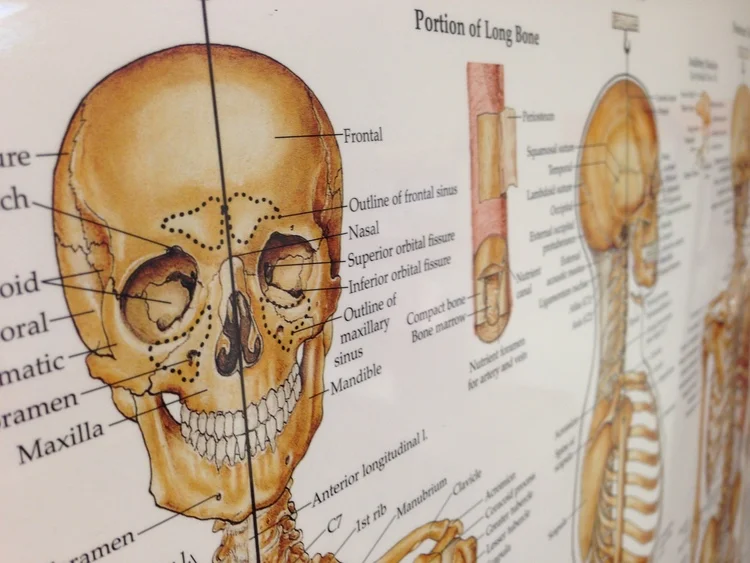
Yes, posture is directly related to TMJ pain and jaw dysfunction. Forward head posture, the most common postural driver of TMD, increases mechanical demand on the muscles that stabilize the jaw, creating sustained tension that contributes to muscle imbalances, uneven disc loading, and chronic jaw pain. The jaw, neck, and upper back operate as an interconnected biomechanical system. What happens in one area directly affects the others.
Here is the more honest version, based on what I actually see clinically.
How Does Forward Head Posture Affect the TMJ?
Forward head posture (FHP) alters the resting position of the lower jaw, overloading the temporomandibular joint and triggering temporomandibular dysfunction. Most people assume posture and jaw pain are either completely unrelated or that bad posture always causes jaw pain. The honest truth lies somewhere between those two extremes and depends heavily on the individual.
Forward head posture, where the head sits in front of the shoulders rather than balanced directly over them, increases mechanical demand on the suboccipital muscles at the base of the skull, the upper trapezius, and the levator scapulae. When those muscles are working overtime to hold the head in a forward position, they create a sustained tension that pulls on everything connected to them, including the muscles and ligaments that stabilize the jaw.
The practical result is mandibular retraction, where the lower jaw is pulled backward and downward, forcing the joint to work against resistance on every opening movement. Over time, that backward pressure can displace the articular disc, contributing to the clicking, uneven loading, and muscle imbalances that drive most TMD cases.
Screen use is the most common driver of this pattern, but the problem existed long before screens were part of daily life. Hours of looking at a monitor positioned too low, or at a phone held below eye level, gradually trains the head into a forward position that becomes the default resting posture. The jaw often pays the price for it.
Why Bad Posture Does Not Always Mean TMJ Pain
Posture does not directly determine pain outcomes. The relationship between alignment and symptoms must be assessed individually, not assumed. I see patients all the time with significant forward head posture and rounded upper backs and shoulders who have no jaw pain, no neck pain, and no functional limitations whatsoever. Their body has adapted to that posture over years or decades, and it functions perfectly well within it. If I tried to intervene and "fix" their posture, I would almost certainly create new movement problems rather than prevent ones that do not currently exist.
I also see patients with near-perfect postural alignment who are in significant, chronic jaw pain. Posture alone does not determine outcome. The correlation that most people assume (bad posture equals pain, good posture equals no pain) simply does not hold up clinically.
My approach is this: if a patient comes to me with TMD symptoms and I notice their posture is contributing to how the jaw is loading, then posture becomes part of the treatment plan. If someone comes in for something else entirely, their posture is poor, but they have zero jaw or neck symptoms, I am not going to touch it. I am not going to fix what is not broken. Trying to intervene where there is no problem often creates one.
The takeaway is not that posture does not matter. It is that posture matters when it is connected to your specific symptoms and movement, and that connection needs to be assessed individually, not assumed.
What Posture Habits Often Make TMD Pain Worse?
For patients who do have a posture-TMD connection, sustained or asymmetrical positions are the primary mechanical drivers of jaw loading. These are the habits I look at first:
Forward head at the workstation: Monitor height, screen distance, and chair support all influence how far forward the head sits during hours of work. A screen positioned too low is one of the most common drivers of forward head posture I see.
Looking down at a phone: The neck loading from sustained downward phone use is equivalent to a forward head position repeated in short, frequent doses throughout the day. The cumulative effect adds up.
Stomach sleeping: Forces the head into a rotated position for hours at a time, creating sustained asymmetrical tension through the cervical spine and jaw stabilizers on one side.
Side sleeping when the jaw shifts: For patients whose jaw deviates to one side during opening, side sleeping repeatedly loads that same side through the night. Switching to back sleeping removes that repetitive asymmetrical pressure.
Bending toward food while eating: The jaw and neck work closely together. Hunching or bending down toward the plate puts the neck in a compromised position during one of the most mechanically demanding activities the jaw performs. Sitting upright and bringing food to the mouth rather than the reverse keeps the jaw in a better position during chewing.
Sustained static postures: Holding any position without moving for long periods — even a technically good posture — creates load accumulation. Variety matters more than perfection.
Can Improving Posture Help Relieve TMJ Symptoms?
When posture is genuinely contributing to TMD, correcting forward head carriage is a direct and measurable intervention, and the improvement can be significant. Patients who reduce the tension load through the cervical chain often notice their jaw feels less effortful to open, less prone to clenching, and less reactive to the things that used to trigger flares. But the approach matters.
Should You Try to Maintain A Perfect Posture to Help With TMJ?
Trying to hold perfect posture all the time can backfire for TMJ. Rigid alignment is exhausting to maintain and tends to create new tension and stiffness patterns. The goal is comfortable, sustainable posture rather than one “perfect” position. I would even go as far as to say perfect posture does not really exist.
What actually works in my clinical experience is intermittent correction. When you notice you have collapsed into a significant forward head position, especially if that position is associated with jaw symptoms, that is the moment to adjust.
Fix your posture the moment you notice a “less than ideal” position, and keep trying to do that throughout the day. You will fall back into those old patterns often, but fixing them every time you notice is the best way to eventually realize better posture day to day. Over time, those intermittent corrections gradually shift the resting default without requiring conscious effort all day.
The other piece is variety. Any position held without movement for extended periods becomes problematic, even if it looks like “perfect posture”. Getting up regularly, changing positions, and keeping the cervical spine moving through its range are as important as any specific corrective posture.
Chewing Habits That Affect Jaw Posture and TMJ Load
Posture during eating is an area that gets almost no attention but makes a meaningful difference for TMD patients. The jaw and neck function as a unit during chewing. The position of one directly affects the load on the other. A few specific habits worth building:
Sit upright when eating: Do not bend down toward your food. The jaw and neck work as a unit, and if the neck is in a compromised position during chewing, the jaw is too. Bring food to your mouth rather than your mouth to your food.
Chew evenly on both sides: Consistently favouring one side during chewing loads one TMJ more than the other and contributes to the muscle imbalances that drive most TMD symptoms. Using the back molars rather than the front teeth distributes load more evenly across the joint.
Avoid hard and chewy foods during flares: Nuts, raw carrots, bagels, steak, and anything similarly demanding on the jaw should be minimized when symptoms are elevated. Cut tough foods into smaller pieces and chew slowly.
How Physical Therapy Addresses Posture for TMJ
Physical therapy for posture-related TMD targets the full muscle chain, not just the jaw, combining manual release with movement retraining to address the source of the problem rather than the symptoms alone.
In the clinic, postural work for TMD patients is not about telling someone to sit up straight and sending them home with a handout. It involves manual release of the muscles that have become shortened and overloaded from sustained postures (the suboccipitals, upper traps, levator scapulae, and paraspinals) combined with retraining the movement patterns that created the problem.
The manual release piece matters because tight, restricted tissue cannot be retrained through exercise alone. You have to release the restriction before the retraining has something to work with. That is why we cover the myofascial release of the cervical chain in detail in our article on massage and myofascial release for TMJ. It is the foundation that postural retraining builds on.
The retraining piece involves building awareness of the patterns that load the jaw, making targeted adjustments to workstation setup and daily habits, and gradually shifting the resting default of the head and neck through consistent intermittent correction rather than forced sustained positioning.
For most TMD patients, posture is one contributing factor among several, not the whole story, but not negligible either. Getting an accurate read on whether and how it is contributing to your specific case is part of what a thorough assessment provides.
If you are ready to find out what is actually driving your jaw pain, our TMJ physical therapy management-program team at Whole Body Health can give you that answer.